

Did you know nearly 60% of Americans feel stressed about their monthly expenses? Managing wealth in today’s fast economy needs more than just willpower. It requires a dependable system.
Our financial lives have changed significantly in response to our busy lives. Choosing the right path is the key to achieving your selected goals. You might prefer to work with a spreadsheet or smart technology, but the way you choose to work will impact your future.
In this guide we look and discuss the AI Finance Apps vs. Traditional Budgeting Tools, and identify the most suitable habit for your habits. These options can be compared to develop a strategy that will suit you.
The Growth of Personal Finance Management
Personal finance has undergone a major transformation, from ink to mobile apps. Thanks to the new features, people can now easily monitor their finances. A personal finance tools comparison highlights the advancement from the old to the new.
Moving from the Ledger Books to Digital Dashboards
Managing money used to mean using a ledger book. Individuals would make note of all purchases. It was a very time consuming and labor-intensive manual process.
We now have digital dashboards. They come with all your financial details in one place. This will make it simple to view the money without having to use a calculator.
The Shift toward Automated Financial Insights
Personal finance has undergone a transformation thanks to automation. Today’s software is more than just tracking money. It also looks at your expenses and provides you with intelligence.
Now, when you check personal finance tools comparison, then you will understand that these types of apps are using predictive analytics. They inform you of bills and also help you save money. This will enable you to make informed decisions about your money.
| Feature | Manual Ledger | Digital Dashboard | AI-Driven App |
| Data Entry | Manual | Manual/Import | Automated |
| Categorization | Manual | Manual | Real-time AI |
| Insights | None | Basic Charts | Predictive |
| Accessibility | Physical Book | Desktop Only | Cloud/Mobile |
AI Finance Apps vs. Traditional Budgeting Tools: A Comparative Analysis.
The decision between new technology and old habits is critical to a good understanding of finances. Knowing the difference between AI Finance Apps vs. Traditional Budgeting Tools is crucial. There are certain ways of dealing with money for each way.
Defining AI-Driven Financial Platforms
Rocket Money or Monarch Money are two examples of AI applications that help people manage their finances with greater ease, employing machine learning to simplify the process. They link the bank accounts and automatically categorize the transactions. This will help them calculate their spending and provide forward-looking advice to prevent overspending.
These kinds of apps can save you lots of time by letting you know of bills and unusual charges. This type of handing over is wonderful for the busy person.
Defining Traditional Budgeting Methodologies
Traditional budgeting needs your active effort and manual input. You might use a ledger or an Excel sheet. This method makes you think about every expense, promoting financial mindfulness.
Many like this method for its control and privacy. It doesn’t rely on algorithms or cloud data. You can tailor it to fit your financial goals perfectly.
What are Traditional Budgeting Methodologies?
The old-fashioned budgeting approach requires your effort and manual work. An excel sheet or ledger may be used. This approach helps you be aware of all costs, creating financial awareness.
Many like this method for its control and privacy. Does not depend on algorithms or cloud data. It can be customized to your financial needs exactly.
| Feature | AI Finance Apps | Traditional Tools |
| Data Entry | Fully Automated | Manual Input |
| Primary Benefit | Time Efficiency | High Mindfulness |
| Customization | Algorithm-Based | User-Defined |
| Data Privacy | Cloud-Encrypted | Local/Offline |
It’s up to you to decide between AI Finance Apps and Traditional Budgeting Tools. If you follow these, both can help you to avoid poor financial management.
The Essence of AI-driven Budgeting
The core of AI-powered budgeting is to turn data into a clear plan for your financial future. It doesn’t just track what you’ve spent. Rather, it employs smart algorithms to anticipate your next monetary step. Budgeting apps keep you from getting caught up in money myths and misconceptions, and instead get you to act instead of simply reacting.
Predictive Spending Pattern
Today’s financial tools are great at spotting trends in your spending. They consider your normal bills, groceries, and so on. It will help them provide you with practical suggestions that you can make to prevent overspending.
These tools can be great for planning your day:
- Predicting future cash flow from previous cash flow.
- Early detection of potential over-spending in some areas.
- Warning you if you have been overspending.
Automated Savings and Debt Management Features: automate the saving and debt management
The main benefit of these websites is they make your money simpler. They streamline the process of transferring funds – you don’t need willpower to move funds. These budgeting app features work silently and make your money go to work.
Debt management is simpler too when using AI tools. They consider your interest rates and balances to recommend the optimal repayment schemes. This will automate your payments, which mean no late fees, and continue to build your finances!
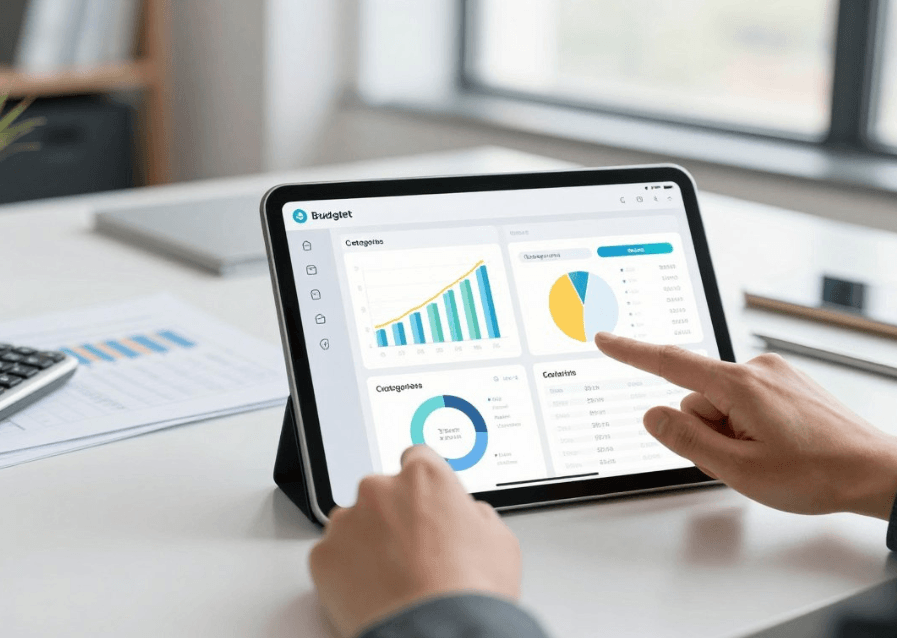
The Discipline of Traditional Budgeting Tools
Technology makes things easy, but managing money is more powerful when done manually. Many people find that using old-school methods helps them see their finances clearer. By working with your money directly, you get a control and insight that software can’t match.
The Zero-Based Budgeting Approach
The zero-based budgeting method means you assign every dollar to a specific use until you’re at zero. This proactive strategy makes sure your money is working for you, not getting lost in random spending. It helps you focus on what’s important and save before you spend on things you want.
This approach clears up the confusion that leads to spending too much. You’re giving every dollar a job, creating a strict yet effective plan for your money each month. This focus is key to keeping your finances stable over time.
Manual Tracking and Financial Mindfulness
Writing down or entering every purchase manually boosts your financial mindfulness and responsibility. When you physically record your spending, you face the truth of how you’re using your money. This pause helps you avoid buying things on impulse.
Doing this makes budgeting a meaningful ritual instead of a task. You start to see patterns, like how subscription costs can add up. By staying connected to your money this way, you keep your financial goals in mind every day.
Comparing User Experience and Accessibility
Looking at personal finance tools comparison shows a big difference. It’s between easy, modern tools and old-school, hands-on methods. Your daily life decides if you need an app or a paper ledger.
Ease of Use for Busy Professionals
Busy professionals love automation. Apps like YNAB or Monarch Money connect with your bank. They sort your money without you having to do it.
This makes it easy to keep track of your money. You can see your finances anytime, anywhere. It’s a big time-saver.
The Learning Curve of Manual Systems
Manual systems, like Excel, need more time but offer unmatched customization. You have to enter every expense yourself. This makes you really think about your spending.
It’s harder to start, but it teaches you a lot. You learn your money habits in a way apps can’t. For those who want control, the effort is worth it.
| Feature | AI Finance Apps | Manual Spreadsheets |
| Time Commitment | Low (Automated) | High (Manual) |
| Data Entry | Automatic Sync | Manual Input |
| Learning Curve | Minimal | Moderate to High |
| Customization | Limited by App | Unlimited |
Your choice in personal finance tools comparison depends on your life. If you want quick and easy, apps are best. For deep insight and control, go for a manual system.
Data Security and Privacy Considerations
It’s important to find a balance between the ease of modern finance apps and strong data protection. When you connect your bank accounts to other platforms, you share your financial history. Knowing how these systems protect your data helps you make smart choices about your online presence.
Encryption Standards in Modern Fintech Apps
Top financial apps focus on your safety with industry-standard security protocols. They use AES-256 bit encryption to keep your data safe. This makes it unreadable to hackers during both sending and storing.
Many apps also use read-only access through secure APIs. This lets them see your spending history but can’t move money. Adding multi-factor authentication (MFA) makes it even harder for hackers to get in, even if they guess your password.
The Privacy Benefits of Offline Budgeting
Offline budgeting is great for those who want to keep their finances private. Using spreadsheets or ledger books means your sensitive data stays on your device. This way, you avoid risks from data breaches or your spending habits being sold.
Going offline means you have total control over your money. You don’t rely on software updates or privacy policies. For those who want absolute data sovereignty, offline tracking is a secure way to keep your financial info private and under your watch.
Cost Analysis: Subscription Models vs. One-Time Investments
The decision of which financial management system to use is a major one. It’s a matter of balance between convenience now and credit card benefits down the road. While modern technology can help make life easier, it’s important to consider how it can impact your savings objectives.
Knowing the difference between the monthly charges and one-time charges is essential. The decision can affect your finances in the long run.
Hidden Costs of Premium AI App Features
Many AI finance apps charge a monthly fee. At first, $5 or $10 a month might seem okay. But over years, these costs add up a lot.
You might pay for premium features you don’t use much. This could include advanced investment tracking or automated tax reporting.
There are also hidden costs. Some apps might sell your data or push high-interest financial products. Before you start paying every month, think about these things:
- Feature Overload: You might be paying for tools you don’t need right now.
- Platform Lock-in: Switching to a new app can be hard and take a lot of time.
- Diminishing Returns: The benefits of automation might not be worth the cost over time.
The Long-Term Value of Spreadsheet-Based Tools
Manual systems, like spreadsheets, are different from today’s fintech. Tools like Microsoft Excel or Google Sheets mean no monthly fees. This takes more initial effort, but you have full control over your money.
Spreadsheets are flexible and last forever. You own your data and aren’t tied to a company’s pricing. Building your own system means it grows with you, without being held back by software updates.
| Feature | Subscription Apps | Manual Spreadsheets |
| Cost Structure | Recurring Monthly/Annual | Free or One-time Purchase |
| Data Ownership | Cloud-based/Third-party | Personal/Local Control |
| Maintenance | Automated Updates | Manual Input Required |
| Customization | Limited by App Design | Fully Customizable |
The best choice depends on what you value more: time or money. If you want hands-off automation, the monthly fee might be worth it. But if you want to save money, a manual system is more sustainable for your finances.
Building Bespoke Budgeting Frameworks in Excel
If you want full control, try making your own budget in Excel or Google Sheets. You can design a system that grows with you. Custom formulas and pivot tables add depth that apps often miss.
Building your own system takes more work upfront. But it’s perfect for complex financial needs. You can track special items like collectables or private investments. This approach helps you stay mindful of your money.
Making the Smart Move – Right Strategy for Your Financial Personality
Knowing your own financial personality makes all the difference. Understand your emotional connection to money, and you are miles ahead on your journey toward wealth. Perhaps you’re the tech-savy consumer who relies on algorithms for optimal returns, or you might be more comfortable manually managing the data.
When is it a good idea to use the Automated Wealth Building Strategy?
Life is busy and you can’t spend too much time on the finances on a daily basis, it just doesn’t work out. Fortunately, there has been technology to the rescue! AI financial managers and automatic savings tools help you stay on track with your financial objectives while you’re on-the-go without needing to check in daily. If you want to invest with little effort in your financial future, automation is the perfect fit. The algorithms take the grunt work, tracking your spending and pinpointing the savings that you can make. Automation also eliminates financial concerns and helps to wealth more sustainably and seamlessly, particularly if you prefer efficiency and financial health over bookkeeping.
When to Choose Manual Control for Debt Reduction
Manual control is better for tackling big debts or changing spending habits. Taking charge to handle every dollar manually makes us more attentive to spending patterns immediately thus enabling breaking the debt loop.
It lends better and complete command over our expenditure than automated software, it aids us become conscious where the majority of cash is accounted for. For aggressive repayment, hand-held discipline is vital.
| Financial Goal | Recommended Strategy | Primary Benefit |
| Wealth Growth | Automated Apps | Time Efficiency |
| Debt Reduction | Manual Tracking | Behavioral Awareness |
| Budget Maintenance | Hybrid Approach | Balanced Oversight |
Conclusion
Choosing the right way to manage your money is all about understanding yourself. You might like the easy setup of apps like YNAB or Monarch Money. Or, you might prefer the detailed control of a custom Microsoft Excel spreadsheet.
Success comes from sticking with a system you can keep up with. A fancy tool won’t help if you quit using it soon. Keeping up with it is key to growing your wealth over time.
The best way to handle your money gives you clear direction. It lets you make choices that help you reach your goals. Choose a method that works for you, not the other way around.
Take a moment to check how you’re doing. If managing your money feels like a burden, try something new today. Even small changes in tracking your income and expenses can make a big difference.
Begin your journey to better money management today. Choose tools that help you control your finances. Your path to financial freedom starts with the next transaction you record.
Honestly I was looking for a reliable spot to play my favorite slots and I finally found it here. The login process is super smooth and I love how quickly payouts get processed. Customer support actually answered me on a weekend which is rare for online gaming. Highly recommend giving this a shot if you want a fair and fun experience. aus55login