
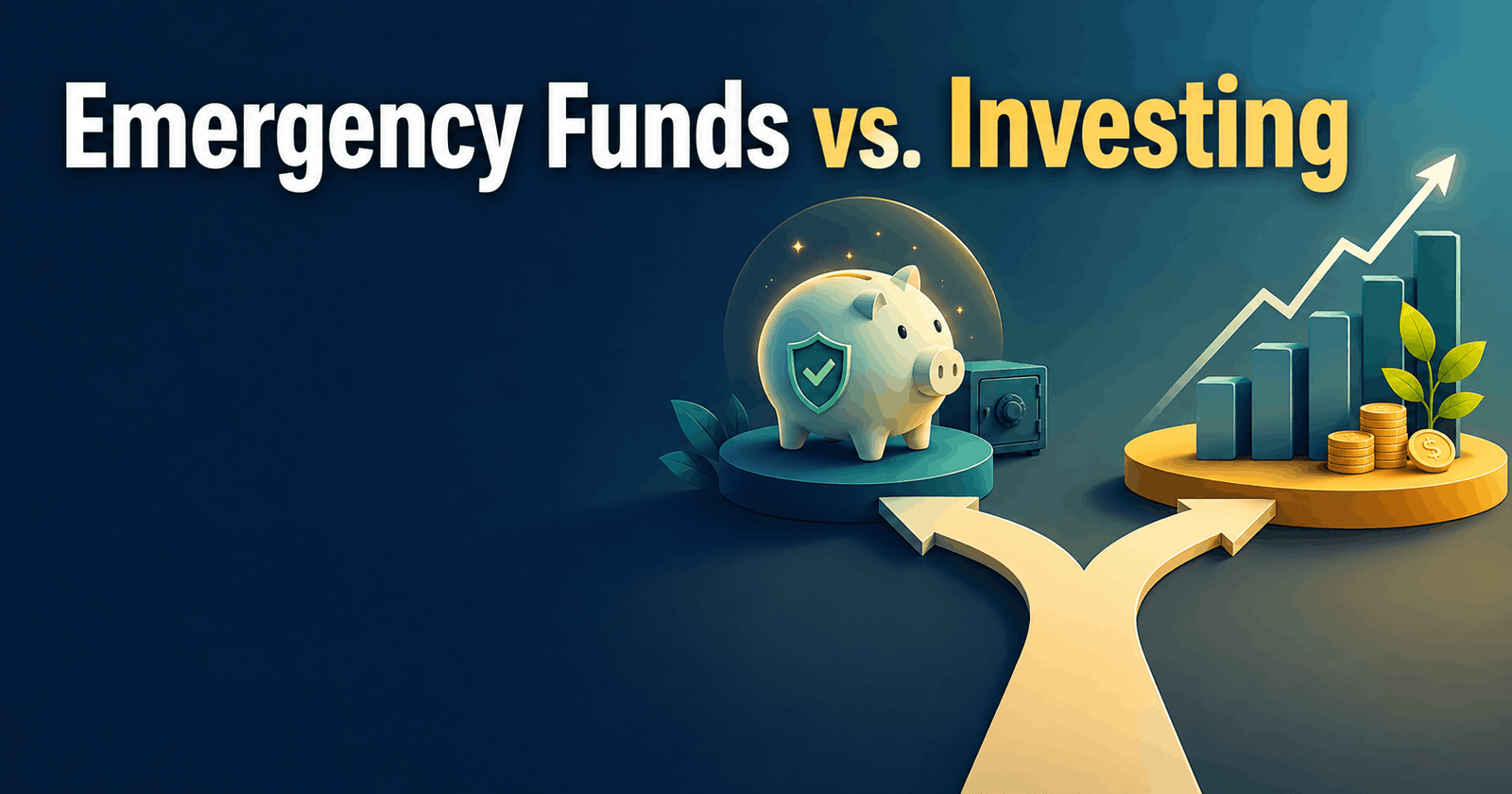
You just got paid, and now you’re staring at your bank account wondering where the money should go. Should you dump it into an index fund and let compound interest do its magic? Or should you park it in a boring savings account “just in case”? If you’ve been going back and forth on this, you’re not alone. It’s one of the most common money questions people search for, and honestly, the answer isn’t as complicated as it sounds.
Why This Question Even Matters
Here’s the thing: both investing and saving are important. But timing matters. Put your money in the stock market before you have a safety net, and one car breakdown or medical bill can force you to sell your investments at the worst possible moment, sometimes at a loss. That’s the trap a lot of beginners fall into. They hear “start investing early” and skip the boring first step.
What Exactly Is an Emergency Fund?
An emergency fund is simply cash set aside for unexpected life events, job loss, medical emergencies, urgent home or car repairs. It’s not meant to grow. It’s meant to protect you. Most financial experts suggest saving 3 to 6 months of essential living expenses, kept in a high-yield savings account where it’s easy to access but still earns a little interest.
So, Should You Save First or Invest First?
The short answer: build a small emergency fund first, then start investing, then keep building your emergency fund alongside your investments.
Here’s a simple approach that works for most beginners:
- Step 1: Save a starter emergency fund of $500 to $1,000. This covers small surprises so you’re not using credit cards.
- Step 2: Once that’s in place, start investing a small, consistent amount, even $50 a month into a retirement account or index fund counts.
- Step 3: Keep growing your emergency fund toward the full 3-6 months target while your investments keep compounding in the background.
This way, you’re not choosing one over the other completely. You’re building both, just prioritizing safety first without putting your long-term growth on pause.
Why Not Invest Everything First?
Investing sounds exciting because of compound growth, and yes, time in the market matters. But if you don’t have a cash cushion and an emergency hits, you may be forced to withdraw investments early. That often means selling at a loss, paying taxes or penalties, and losing years of growth. An emergency fund protects your investments from becoming your emergency backup plan.
Why Not Save Everything First?
On the flip side, waiting until you have a full 6-month emergency fund before investing a single dollar means missing out on years of compound growth. Money sitting in a savings account rarely beats inflation. The goal isn’t perfection, it’s balance.
A Quick Real-Life Example
Imagine two friends, both earning the same salary. One waits three years to build a full emergency fund before investing a cent. The other saves a small starter fund, then invests consistently while building the rest of their fund. By year five, the second friend usually ends up with more wealth and still has a safety net, because their money had more time to grow.
Final Thoughts
There’s no need to see this as an either-or decision. Start with a small cushion, then let your money work in both directions, protecting your present and building your future. The key isn’t picking sides, it’s creating a system where safety and growth move forward together.