

Introduction
Let’s be honest — saving money is something most of us want to do but struggle to actually follow through on. Life gets busy, unexpected expenses pop up, and before you know it, the end of the month arrives with little to nothing left over.
But here’s the good news: it doesn’t have to be that way.
With the right strategies for saving and the best saving tools at your fingertips, building a healthy financial cushion is more achievable than you think. You don’t need to be a financial expert or earn a six-figure salary to make real progress. What you need is a clear plan and the tools to back it up.
In this article, we’re going to walk through 5 proven strategies that can help you maximize your savings — no fluff, no complicated financial jargon. Just practical steps you can start using today.

Strategy #1: Set a Clear Savings Goal (And Write It Down)
One of the most effective strategies for saving money is also the simplest one — set a specific goal.
Vague intentions like “I want to save more” almost never work. What does work is a clear, concrete target: “I want to save $5,000 in 12 months for an emergency fund.”
When you put a number and a timeline to your goal, your brain treats it differently. It becomes real. It becomes something to work toward.
How to do it:
- Identify what you’re saving for (emergency fund, vacation, down payment, retirement).
- Put a dollar amount on it.
- Set a realistic deadline.
- Break it down monthly. $5,000 in 12 months = roughly $417 per month.
Saving tools that help: Apps like Mint, YNAB (You Need A Budget), and Personal Capital let you set savings goals and track your progress visually. Seeing that progress bar move forward is surprisingly motivating.
The key takeaway? Goals without numbers are just wishes. Give your savings a destination.
Strategy #2: Automate Your Savings (Pay Yourself First)
Here’s a simple truth: if the money sits in your checking account, you’ll spend it. Human nature almost guarantees it.
The “pay yourself first” approach flips the script. Instead of saving whatever’s left at the end of the month, you move money into savings before you even get a chance to spend it.
This is one of the most powerful strategies for saving because it removes the willpower equation entirely. You don’t have to make a decision every month — the system makes it for you.
How to do it:
- Set up an automatic transfer from your checking to your savings account on payday.
- Even starting with $50–$100 per paycheck makes a difference.
- Gradually increase the amount by 1% every few months as you get comfortable.
Saving tools that help: Most banks offer free automatic transfer scheduling. Beyond that, apps like Digit, Qapital, and Chime are specifically designed around automation. Digit, for example, analyzes your spending habits and moves small amounts into savings without you having to think about it.
The beauty of automation is this: out of sight, out of mind — but still growing.

Strategy #3: Track Every Dollar You Spend
You can’t fix what you can’t see.
Most people are genuinely surprised when they finally track their spending — not because they’re irresponsible, but because small purchases add up in ways that aren’t obvious day to day. That daily coffee, the forgotten subscriptions, the impulse Amazon orders — they quietly drain your account.
Tracking your expenses is a foundational strategy for saving because it gives you visibility. And visibility gives you choices.
How to do it:
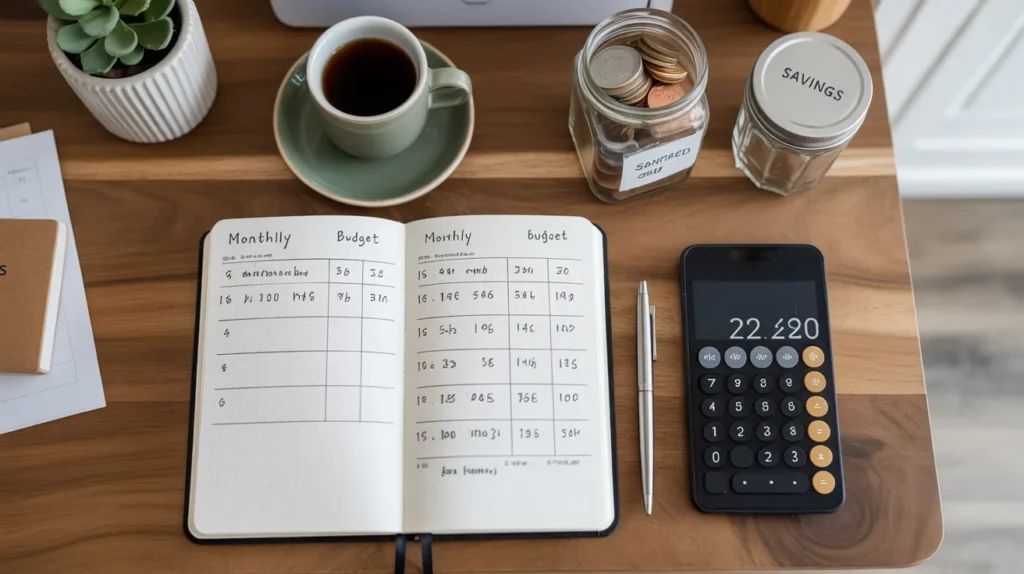
- For one full month, record every single expense — coffee, groceries, streaming services, everything.
- Categorize your spending (food, transport, entertainment, etc.).
- Identify 2–3 areas where you’re spending more than you realized.
- Make small, targeted cuts in those areas only.
The goal isn’t to live like a monk. The goal is to make intentional choices rather than mindless ones.
Saving tools that help: Mint automatically syncs with your bank and credit cards to categorize every transaction. PocketGuard shows you how much you have left to spend after bills and savings. Copilot (for Apple users) offers a beautifully designed experience that makes tracking actually enjoyable.
When you track your spending for 30 days, patterns emerge. And patterns can be changed.
Strategy #4: Use High-Yield Savings Accounts
Here’s something a lot of people don’t realize: where you keep your savings matters almost as much as how much you save.
If your money is sitting in a traditional savings account earning 0.01% interest, you’re essentially leaving money on the table. High-yield savings accounts (HYSAs), on the other hand, can offer interest rates that are 10 to 20 times higher than a typical bank account — sometimes 4–5% APY or more, depending on current rates.
This is one of the most underutilized saving tools available to everyday people. It requires zero extra effort on your part. You just move your savings to the right account and let compound interest do its job.
How to do it:
- Open an HYSA with an online bank (they typically offer better rates than traditional banks since they have lower overhead).
- Transfer your emergency fund and other savings there.
- Keep your everyday checking at your regular bank for convenience.
Popular high-yield savings tools include: Marcus by Goldman Sachs, Ally Bank, SoFi, and Discover Bank. Most of these are FDIC insured and have no monthly fees.
A $10,000 emergency fund growing at 4.5% APY earns you $450 in a year — without doing anything. Compare that to $10 from a 0.1% account. The math speaks for itself.
Strategy #5: Cut Recurring Costs with Subscription Audits
Subscriptions are the silent savings killers of the modern era.
Between streaming services, gym memberships, meal kit deliveries, app subscriptions, and cloud storage plans, the average American spends over $200/month on subscriptions — and most people underestimate that number when asked.
Doing a regular subscription audit is one of the quickest, most impactful strategies for saving money because the results are immediate. Cancel something today, and that money stays in your pocket next month.
How to do it:
- Go through your last two months of bank and credit card statements.
- Highlight every recurring charge, no matter how small.
- Ask yourself for each one: Am I actively using this? Is it worth the cost?
- Cancel anything that doesn’t make the cut.
- Consider pausing instead of canceling if you’re unsure (most services allow this).
Aim to do this audit every 3–6 months. New subscriptions have a way of sneaking back in.
Saving tools that help: Rocket Money (formerly Truebill) is one of the best apps specifically designed for this — it finds subscriptions you might have forgotten about and can even negotiate to lower your bills on your behalf. Trim works similarly and has a strong track record of getting users real savings.
Cutting just $80/month in unused subscriptions adds up to $960 saved per year. That’s almost a month’s rent for many people.
Bringing It All Together
The most effective savings plan isn’t one that’s perfect — it’s one you’ll actually stick to.
Start with just one or two of these strategies and build from there. You don’t need to implement everything at once. Progress, not perfection, is what moves the needle.
To recap, here are the 5 proven strategies for saving money with the right tools:
- Set clear, specific savings goals — give your money a destination.
- Automate your savings — pay yourself before you spend.
- Track every dollar — awareness leads to better choices.
- Move savings to a high-yield account — make your money work harder.
- Audit your subscriptions — cut what you don’t use.
Each of these strategies works on its own. Combined, they create a system that consistently grows your savings month after month — without requiring you to completely overhaul your lifestyle.
Final Thoughts
Saving money doesn’t have to feel like punishment. With the right saving tools and a few smart habits, you can make meaningful financial progress without feeling deprived.
The first step is always the hardest. Pick one strategy from this list, set it up this week, and let momentum take over from there.
Your future self will thank you.
1 thought on “5 Proven Strategies to Maximize Your Savings with These Tools”