
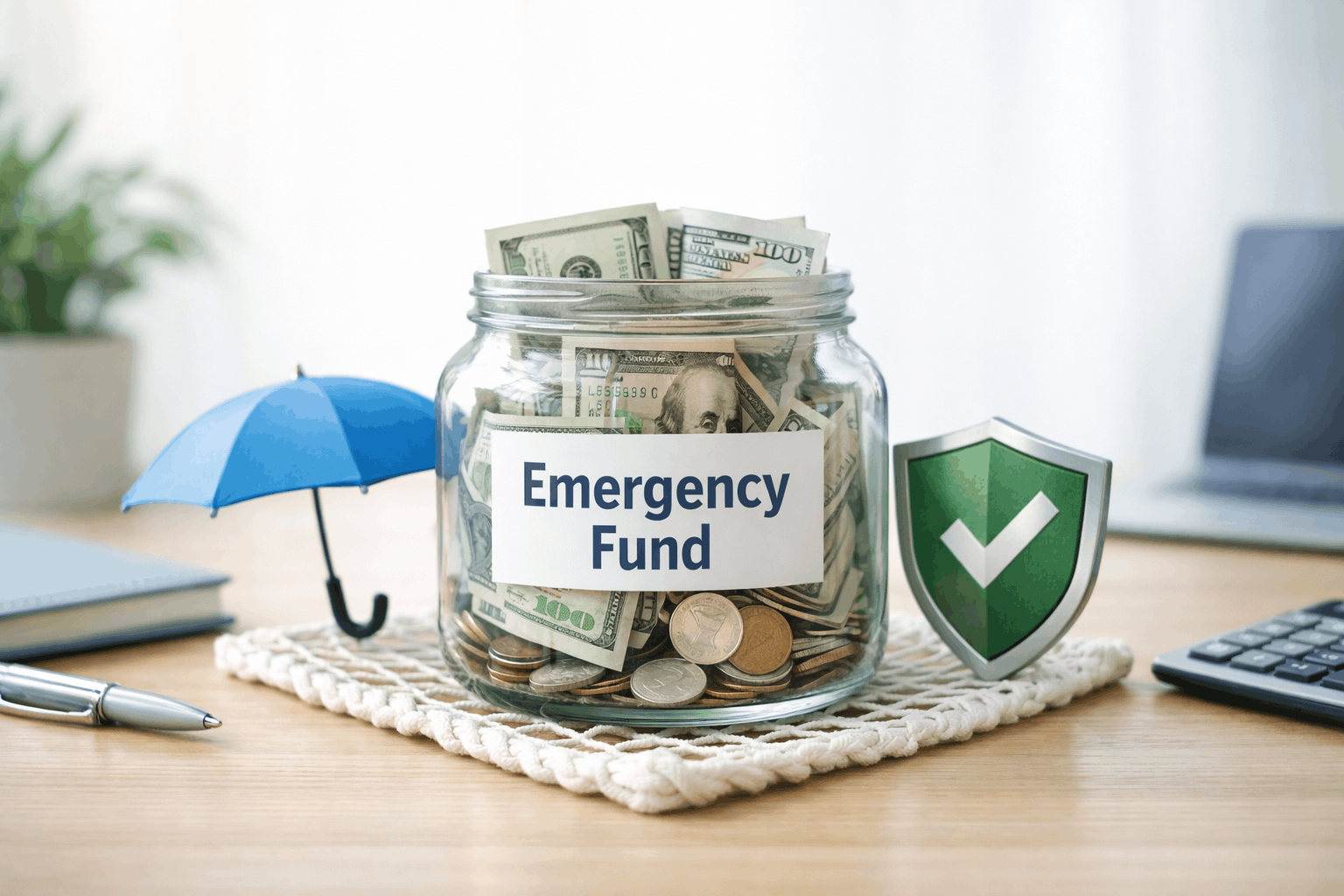
Managing your Personal finance isn’t just about becoming rich quickly, but also maintaining financial stability in times of crisis. Through my experience working with hundreds of people and families over the last 8 years, I feel confident that, for most people, stress related to finances comes from incompetency, rather than not earning enough money.
This is why having an emergency fund is so important.
This article will explain what an emergency fund really is, why it matters more than you think, and how much money you should realistically save based on your life situation.
What Is an Emergency Fund?
An emergency fund is cash set aside to handle unexpected but necessary expenses. These expenses are not things that you have budgeted for such as vacations or new electronic equipment. These are events that happen in your life requiring you to pay for them immediately.
Common Emergencies Include:
- Sudden job loss
- Medical expenses not fully covered by insurance
- Repairs to Your Home or Car
- Family emergencies
- Temporary income reduction
An emergency fund serves as a financial safety net. It helps you avoid debt and poor financial choices during times of stress.
Why an Emergency Fund Is the Foundation of Personal Finance
An emergency fund must be placed ahead of investing / building wealth when creating a personal finance plan. Why? Due to the fact that investments can go up and down in value but emergencies do not wait for anyone.
The disadvantages of emergency fund:
- You will use credit cards.
- You will have to take out high-interest loans.
- You will sell long-term investments at an inopportune time.
With an emergency fund:
- You stay calm during crises
- You protect your savings goals
- You maintain financial independence
In simple terms, an emergency fund buys you time and peace of mind.
How Much Money Should You Really Save?
There is no single number that fits everyone. However, there are proven guidelines that work in most situations.
The Standard Rule: 3 to 6 Months of Expenses
Financial experts recommend savings equivalent to three to six months’ worth of necessary living expenses.
This includes:
- Rent or mortgage
- Utilities
- Groceries
- Transportation
- Insurance
- Minimum debt payments
It does NOT include:
- Dining out
- Entertainment
- Shopping
- Subscriptions
Your emergency fund should cover survival, not lifestyle.
Deciding the Length between 3, 6, or More Months
Let’s break this down in a practical way.
Three Month Savings Is Sufficient When:
- You Have A Job With Stability
- You Have A Predictable Income
- You Have Few Dependents
- You Work In A High Demand Occupation
Six-Month Savings Is Better When:
- You Are The Sole Income Earner
- You Have Children Or Other Dependent Family Members
- Your Job Market Is Unstable
- Your Monthly Expenses Are High
9 to 12 Months If:
- You are self-employed
- You work freelance or on commission
- Your income fluctuates
- You own a business
From my experience as a financial adviser, most people feel safest around six months of expenses.
Real-Life Example #1: Job Loss Without an Emergency Fund
Asim, a 34-year-old marketing professional, was confident of his job security and excellent salary. He ignored to create an emergency fund and focused on investing.
He lost his job overnight due to an unexpected downsizing at his employer.
Without any savings:
• He paid for everyday costs with credit cards.
• Debt accumulated in less than three months
• His job hunt was impacted by stress.
He eventually secured a new position, but it took more than a year for his finances to improve.
Lesson: Liquidity keeps you afloat when income ceases, but investments are crucial.
Real-Life Example #2: Emergency Fund That Changed Everything
Sarah, a school teacher, earned a modest income. She saved consistently and built a six-month emergency fund over two years.
When her father fell seriously ill:
- She took unpaid leave
- Covered medical travel costs
- Avoided loans completely
She later told me that her emergency fund gave her something priceless: control during a difficult time.
Lesson: An emergency fund does not just protect money. It protects choices.
How to Calculate Your Emergency Fund Amount
Follow these simple steps:
Step 1: List Monthly Essentials
Write down only necessary expenses.
Example:
- Rent: $1,000
- Utilities: $200
- Food: $400
- Transport: $150
- Insurance: $250
Total Monthly Expenses = $2,000
Step 2: Multiply by Desired Months
- 3 months = $6,000
- 6 months = $12,000
This number is your target emergency fund.
Where Should You Keep Your Emergency Fund?
Your emergency fund must be safe and accessible.
Best Options:
- High-yield savings account
- Money market account
- Separate bank account (to avoid spending)
Avoid These:
- Stocks or mutual funds
- Cryptocurrency
- Long-term deposits with penalties
Emergency money should not be exposed to market risk.
How to Build an Emergency Fund Faster
Saving a large amount can feel overwhelming. Break it down.
Practical Strategies:
- Start with a small goal ($1,000 first)
- Automate monthly savings
- Save bonuses or tax refunds
- Cut temporary expenses
- Increase savings after raises
Consistency matters more than speed.
Final Thoughts: Your Safety Net Comes First
After more than eight years in personal finance advising, I can say this with certainty: An emergency fund is not optional. It is the foundation of financial stability.
You do not need to be perfect. You just need to start. Even saving a small amount consistently can change your financial future.
6 thoughts on “Emergency Fund Explained: How Much Money Should You Really Save?”